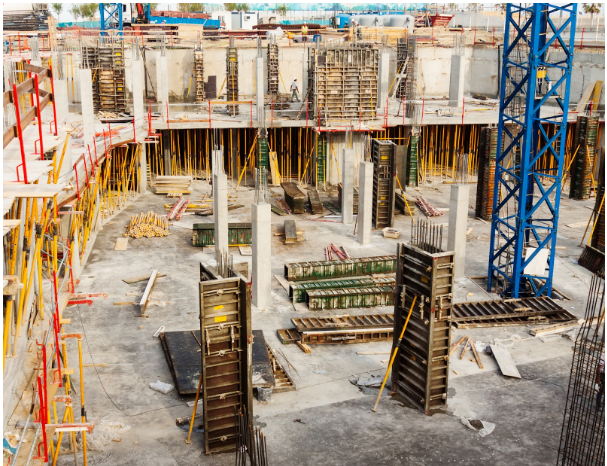
Dust in project sites is more than just a minor inconvenience. The health hazards caused by dust can affect construction and demolition workers without proper monitoring.
And dust can also affect the surrounding environment. With a focus on that, let’s help site managers, contractors, and safety officers understand how a dust monitoring program can be implemented effectively.
Why Dust Monitoring Matters for Construction & Demolition
The simplest answer is that dust monitoring is important for adhering to compliance rules. These regulations, such as the National Construction Code (NCC) in Australia and the Construction (Design and Management) Regulations 2015 (CDM 2015) in the UK, focus on the proper management and monitoring of construction and demolition sites.
However, more than the regulatory needs, dust can also be a critical health hazard for people working in construction and demolition sites, as well as for people living in nearby areas. And these facts make dust monitoring crucial in these sites.
This is discussed in the worker health regulation laws in countries, i.e., Worker Health and Safety (WHS) laws in Australia and the Occupational Safety and Health Administration (OSHA) in the USA.
These regulatory acts focus on protecting construction and demolition workers against the common health risks brought on by dust. Health risks such as eye irritation and respiratory diseases are some of the common challenges of excess dust at a site.
And not only does the exposure to dust impact the workers, but also the surrounding environment. Diseases such as respiratory infections, skin diseases, or even cardiovascular diseases can harm the surrounding environment due to construction dust exposure. And thus, dust monitoring becomes essential.
Understanding Types of Dust on Job Sites
So, it has been established that dust can have critical impacts on people within and around a construction site. However, for effective dust monitoring, a greater focus on some key pieces of information is necessary.
One such key piece of information is on different types of dust particles. There are two common types to keep in mind: PM10 and PM2.5.
PM10 stands for particulate matter of a diameter of 10 micrometres or less. Alternatively, PM2.5 is the name for the fine dust particles (diameter <= 2.5 micrometres).
With that in mind, here’s a chart depicting the key differences between the two:
| Factors | PM10 | PM2.5 |
| Size | Diameter of 10 micrometres or less | Diameter of 2.5 micrometres or less |
| Source | A broader range of sources, such as construction projects, dust from natural events, road dust, etc. | Specific sources, usually related to combustion processes, such as auto exhaust pipes or industrial emissions. |
| Health Concern | Can enter the lungs through inhalation and can lead to respiratory problems. | Can penetrate deeper into the bloodstream, leading to the potential of cardiovascular diseases. |
Table 1: PM10 vs PM2.5 dust particle comparison
In construction and demolition processes, both types of dust particles can be present. PM2.5 particles are, however, more harmful due to their significantly smaller size. Although, that does not change the fact that dust monitoring will be required for both.
To ensure the health of the workers and that of the residents in surrounding regions, no matter the particle size, strict monitoring is essential. And with that, let’s discuss the effective monitoring steps for environmental project management:
5 Steps to an Effective Dust Monitoring Process
Here’s a deep dive into the steps to take to conduct dust monitoring in a construction or demolition site:
Step 1 – Conducting a Site Risk Assessment
In this step, you have to identify the risks associated with the exposure to dust within your site. You can achieve it by:
- Identifying the key points of dust generation
- Conducting an assessment of the flow of the dust, such as wind direction and weather.
- Evaluating the work process and intensity to understand the overall dust generation levels.
- Marking the zones with the highest concentration of dust particles in a site.
Step 2 – Selecting the Appropriate Dust Monitoring Devices
A key aspect of environmental project management is preparedness against any factor that can negatively impact the environment. This would definitely include having the appropriate equipment ready for dust monitoring.
These can include real-time monitoring equipment, optical particle counters, and gravimetric samplers. Moreover, their effectiveness can be estimated by evaluating their accuracy, battery life, and so on.
Step 3 – Setting Up and Calibrating the Devices
The next step would be setting up the devices. The devices should be set up in spots that have the highest concentration of dust particles.
Moreover, these devices should also be calibrated appropriately. A simple way to make sure of this is to follow the manufacturer’s guidelines for calibration.
Also, during the setup process, it is better to remove any objects that can act as a deterrent to the accuracy of the readings.
Step 4 – Recording, Interpreting & Responding to Data
Having set the devices up, the next step would be to record, interpret and respond to the gathered data. And how can you effectively perform that? Here are some possible steps:
- Understanding and responding to real-time alerts.
- Identifying trends and repetitive behaviours that would require immediate attention.
- Ensuring that the reporting system that is followed adheres to compliance with the regulatory principles.
Step 5 – Implementing and Maintenance
The final step would be to undertake a system for long-term implementation.
And how would that be possible? Using the knowledge gathered from the device reports and risk management measures to establish practices that minimise the impact of dust particles:
- Recommending PPE kits for workers
- Regular analysis of the air and water in and around the sites
- Managing vehicle routes to eliminate dust generation
And these can be maintained regularly in the long run by:
- Regular schedules for calibration
- Revising site plans depending on work phases
- Continued upskilling of workers through training based on changing industry standards
Thus, with a careful consideration of your site’s needs and safety considerations, these steps can lead to the most effective dust monitoring systems.
Summing Up
Therefore, dust monitoring of construction or demolition sites is not a one-and-done thing. With careful preparation and considering a series of continued actions, it can lead to significant benefits in the environmentally viable management of a project.
Starting a Construction Project? Do Not Forget to Monitor Dust Levels!
With the help of environmentally friendly service providers, you can ensure that your construction project follows all the right steps. So, start designing your dust monitoring plan today! And make sure that your project is managed skillfully, favouring the environment!
Latest Blogs: