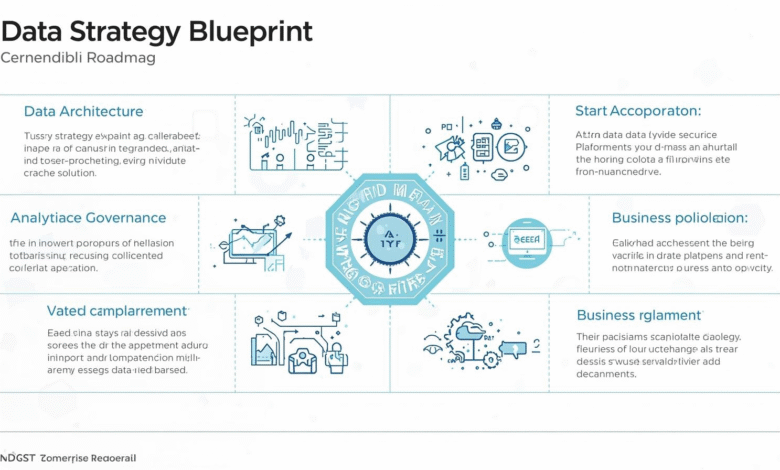
In today’s fast-paced business world, data is one of the most valuable assets a company can possess, but simply collecting it isn’t enough. A data strategy blueprint provides a structured roadmap for managing, analyzing, and leveraging data to achieve business goals, ensuring that information becomes actionable insights rather than overwhelming noise. By aligning people, processes, and technology, this blueprint enables smarter decisions, improved efficiency, and long-term competitive advantage, making it an essential foundation for any organization seeking data-driven success.
What Is a Data Strategy Blueprint?
A data strategy blueprint is a comprehensive plan that defines how an organization will collect, manage, store, analyze, and use data to drive business value. Unlike technology-focused plans, it integrates people, processes, and systems to ensure data is reliable, accessible, and actionable.
At its core, a blueprint ensures that data is not just stored but is transformed into insights that inform decision-making, optimize operations, and enhance customer experiences. It acts as a guide for aligning data initiatives with business goals, ensuring every project contributes measurable value and supports long-term growth.
Why Every Business Needs a Data Strategy
In a world where information is abundant but time and resources are limited, organizations cannot rely on intuition alone. A well-crafted data strategy helps businesses:
- Make Smarter Decisions: By providing accurate and timely information, data enables leaders to make informed, evidence-based decisions rather than relying on guesswork.
- Enhance Efficiency: Structured data reduces duplication, errors, and unnecessary effort, streamlining operations across departments.
- Gain Competitive Advantage: Companies that leverage data effectively can anticipate trends, innovate faster, and outperform competitors.
- Mitigate Risk: Strong governance and compliance measures reduce security threats and ensure adherence to regulations such as GDPR or CCPA.
- Foster a Data-Driven Culture: Employees empowered with trusted data can make better operational decisions, collaborate efficiently, and contribute to organizational growth.
Without a strategy, data initiatives often fail, producing fragmented results, wasted resources, and missed opportunities. A blueprint creates consistency, accountability, and alignment across the organization.
Core Components of a Data Strategy Blueprint
A successful data strategy integrates multiple components into a unified plan. These key pillars include:
Clear Business Objectives and Vision
Every data initiative must directly support business goals. Organizations should define measurable objectives, such as improving customer retention, increasing revenue, or optimizing operational processes. A clearly articulated vision ensures that all data projects focus on achieving tangible outcomes and align with long-term strategy.
Data Governance and Quality
Data governance establishes rules, policies, and responsibilities for data management. It ensures accuracy, consistency, and compliance across all data sources. By defining ownership, access rights, and quality standards, governance builds trust in the data and reduces risks associated with poor-quality information or regulatory violations.
Data Architecture and Integration
Data architecture defines how information flows through the organization. This includes storage solutions such as data warehouses or lakes, processing pipelines, and integration platforms that connect disparate systems. A flexible, scalable architecture ensures that data is accessible to those who need it and can support evolving business requirements.
Analytics and Insights
Once data is organized, analytics tools and techniques transform it into actionable insights. This includes business intelligence dashboards, predictive models, and machine learning algorithms. These insights empower decision-makers to anticipate trends, optimize processes, and uncover new business opportunities.
Security and Privacy
Data protection is critical for maintaining trust and avoiding costly breaches. Security measures such as encryption, access control, monitoring, and compliance with regional regulations safeguard sensitive information. A secure data strategy ensures that insights can be leveraged confidently without risking organizational or customer data.
Step-by-Step Guide to Building Your Data Strategy Blueprint
Creating an effective data strategy involves a systematic approach. Follow these steps for successful implementation:
Define Your Objectives and Vision
Start by identifying the specific business problems your data strategy should address. Determine key performance indicators (KPIs) to measure success. A clear vision aligns stakeholders and sets the stage for actionable, impactful initiatives.
Assess Current Data Assets
Evaluate your existing data sources, storage systems, tools, and processes. Identify gaps, redundancies, and opportunities for improvement. This assessment provides insight into what changes or upgrades are necessary to support the strategy.
Establish Governance and Quality Standards
Define clear policies for data ownership, access, and usage. Implement quality standards to ensure reliability, consistency, and compliance. Strong governance fosters trust in your data and reduces errors or misuse.
Design Data Architecture
Choose scalable, flexible infrastructure to support your strategy. Consider hybrid cloud solutions, data lakes, or warehouses, along with integration platforms to unify disparate sources. The architecture should accommodate current needs and future growth.
Enable Analytics and Insights
Leverage tools that turn structured data into insights. Implement dashboards, reporting systems, and predictive analytics to guide decision-making. Real-time insights help organizations react quickly to market changes and operational challenges.
Build a Skilled Data Team
Success relies on the people who execute the strategy. Include data engineers, analysts, scientists, and governance specialists. Upskill existing employees or hire experts to ensure the team can manage and leverage data effectively.
Monitor, Measure, and Improve
A data strategy should evolve continuously. Track KPIs, adoption rates, data quality, and operational impact. Regular review and iteration ensure the strategy stays aligned with business goals and adapts to technological advancements.
Real-World Benefits of a Data Strategy Blueprint
Implementing a strong blueprint delivers measurable outcomes:
- Enhanced Customer Experience: Personalized offerings, improved engagement, and higher loyalty through data-driven insights.
- Operational Efficiency: Optimized processes, predictive maintenance, and reduced downtime.
- Revenue Growth: Better forecasting, identification of profitable opportunities, and cost reduction.
- Faster Decision-Making: Real-time dashboards and alerts enable timely responses to trends or issues.
By leveraging data effectively, organizations gain a strategic advantage across all departments.
Challenges and Solutions
Even with a blueprint, organizations face obstacles:
- Poor Data Quality: Address with regular cleansing, validation routines, and consistent definitions.
- Skill Gaps: Invest in training or partner with external experts to fill roles in analytics and data management.
- Resistance to Change: Encourage adoption through leadership support, communication, and demonstrating benefits.
- Fragmented Systems: Use integration platforms to centralize or synchronize data across departments.
Proactively tackling these challenges ensures your strategy delivers long-term results.
Conclusion
A data strategy blueprint is the foundation of a modern, data-driven organization. By aligning business objectives, governance, architecture, analytics, and security, companies can transform raw data into a powerful strategic asset. This approach enables smarter decision-making, operational efficiency, and sustainable growth. Investing in a well-crafted blueprint today ensures organizations remain competitive, adaptable, and capable of unlocking the full potential of their data for years to come.
FAQs
What is a data strategy, and why does it matter?
A data strategy outlines how an organization gathers, manages, and leverages data to support its business objectives. It is important because it turns raw information into actionable insights, improves decision-making, boosts efficiency, and creates a competitive advantage.
What are the key components of an effective data strategy?
The main components include clear business objectives, governance and quality standards, scalable architecture, analytics and insights, and security measures. Together, they ensure data drives real value.
How do you start building a data strategy blueprint?
Begin by defining objectives and KPIs, assessing your current data assets, establishing governance policies, designing architecture, implementing analytics, building a skilled team, and continuously monitoring and refining the strategy.
What is the difference between a data strategy and a data-driven strategy?
A data strategy is the plan for managing and using data, while a data-driven strategy refers to making business decisions based on insights generated from data. The strategy defines the “how,” and the data-driven approach reflects the “results.”
How frequently should a data strategy be reviewed and updated?
A data strategy should be reviewed at least once a year to ensure it stays aligned with evolving business objectives, new technologies, and changing data requirements. Regular reviews help maintain effectiveness, relevance, and long-term value.
LATEST BLOGS :
| Mebalovo – Complete Platform Guide |
| Utanmazkizkar – Digital Culture Explained |
| AIMPCity – Beginner’s Complete Guide |
| TUSCL – Nightlife & Community Guide |
| My Pervy Family Series – Story Explained |